
Category: Tech Explained
Reading Time: 4 Minutes
Reading Time: 4 Minutes
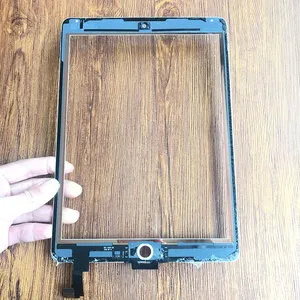
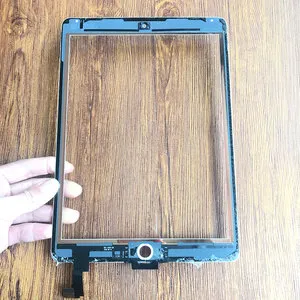
If you have ever seen a disassembled iPad or a replacement part for the outer screen, you might have noticed a distinctive golden line running around the perimeter of the glass. This isn't just decoration—it is the heartbeat of your iPad's interactivity.
This "golden rim" is the flexible printed circuit (FPC) and the antenna layer for the touch digitizer. Modern iPads use projected capacitive touch technology (similar to your smartphone). This technology relies on a grid of microscopic electrodes to sense the electrical properties of your finger or the tip of an Apple Pencil.
When you swipe, tap, or draw, you are completing a tiny circuit at that specific coordinate on the grid. The golden circuitry collects this data and sends it to the iPad's logic board at incredible speeds.
Why does this matter?
When an iPad is dropped, the rigid glass might survive, but the force can crack these microscopic pathways within the golden layer. This results in "line blindness," where a specific vertical or horizontal line on the grid stops sending data. Understanding this helps explain why a screen can look flawless to the eye but be completely unusable for work or play. It is a marvel of engineering, but also a reminder of how delicate our daily tech tools truly are.
When an iPad is dropped, the rigid glass might survive, but the force can crack these microscopic pathways within the golden layer. This results in "line blindness," where a specific vertical or horizontal line on the grid stops sending data. Understanding this helps explain why a screen can look flawless to the eye but be completely unusable for work or play. It is a marvel of engineering, but also a reminder of how delicate our daily tech tools truly are.